
Does your entrepreneurial spirit have you thinking about how to start a burial vault business?
If so, your search has led you to a great source for credible information and honest advice.
I would like to preface this blog by stating that I am a firm believer in Roger Clemens’ quote, “I think anything is possible if you have the mindset and the will and desire to do it and put the time in.”
And when it comes to a business aspiration, I feel strongly that you shouldn’t let anyone or anything stand in the way of your dreams.
With that being said, I can assure you that embarking upon a career in the manufacturing and servicing of outer burial containers and vaults is no small endeavor.
That is why the purpose of this blog will be to first explain how to determine a prospective business’s viability and then offer some insight on how to get the venture headed in the direction of success.
Market Analysis
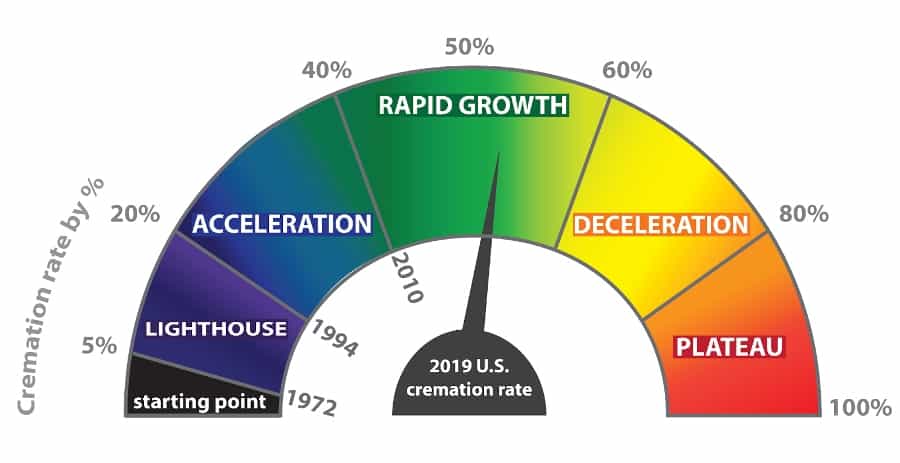
Image credit of CANA (Cremation Association of North America)
Prior to launching the business, you will want to thoroughly assess the market and devote some time to researching the competition.
Both the death rate and the cremation rate in your community need to be taken into account when forecasting sale opportunities. It will be important to know if these numbers are expected to increase or decline over time and how such fluctuations will affect future revenue.
In order to get a true handle on long-term sustainability, population trends and demographics need to be factored into the analysis as well.
Competition
Typically, every service area has one main player who has been in that market for multiple decades.
As a new dealer, you will be faced with the challenge of figuring out how to differentiate your business from the competitor.
The margins on burial vaults are pretty tight so offering deep discounts generally isn’t the best strategy.
Probably the most effective way to gain traction is to find out what the dealer you are going up against is doing and figure out how to do it better.
This could mean investing in equipment that is newer or more advanced than the current supplier’s or offering better customer service.
Prior Experiences

I had the chance to sit down with Jeff Miller, Vice President of Business Development for Trigard, and get his perspective on what it takes to start a successful burial vault operation.
He talked at length about the experiences and circumstances that he has observed that have helped newcomers transition into the business.
Below are examples that he identified as having the biggest impact:
- Cemetery work history – familiarity with vault setting and equipment maintenance, exposure to the process of opening and closing graves
- Hands-on precast concrete plant experience
- Prior involvement or association in some aspect of funeral service
- Established relationships with area funeral homes and/or cemeteries
- Currently own a building with the required infrastructure
Key Relationships

In the funeral industry, loyalty runs deep and business relationships often go back years and in many cases, generations.
I learned this to be true when I took on a short-term assignment selling caskets to funeral homes.
Several of my customers openly admitted that I was offering a superior product but refused to buy from me because of the strong relationships they had with their longtime salesperson.
Funeral practitioners and cemeterians often have similar allegiances to their burial vault dealers and won’t jump ship without a very compelling reason.
Establishing your business as trusted and customer-focused will be instrumental in growing and retaining clients.
Physical Infrastructure

Building a burial vault business from the ground up requires a substantial financial investment.
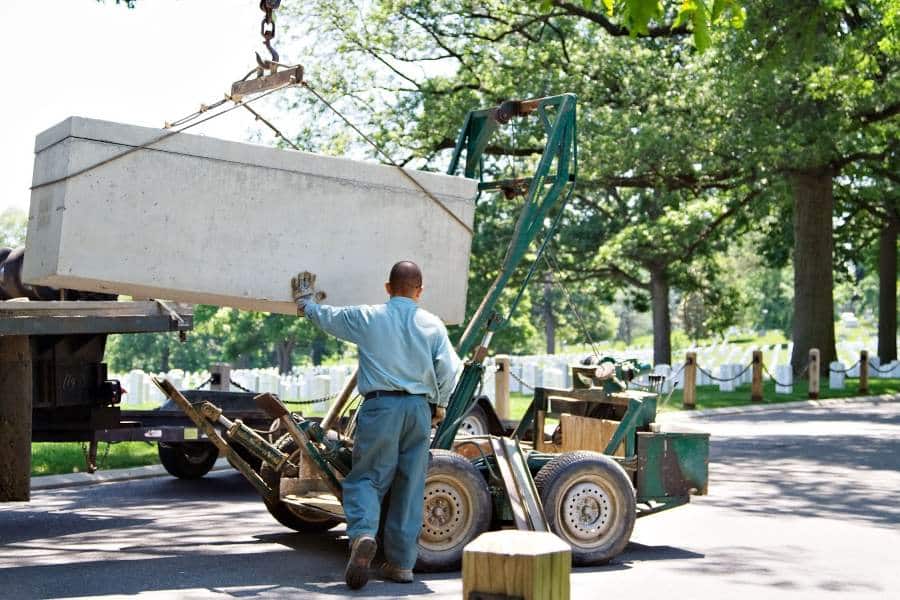
The largest expenditure will be purchasing or leasing a building to operate within. Most vaults are poured in large, heated metal buildings that have concrete floors.
Below is a list of the additional infrastructure and associated expenses one can expect to incur.
- Casting molds: Approximately $25,000 for a start-up set
- Vault cart: $25,00
- Handling equipment (crane, forklift, end loader): Costs vary greatly, but will be significant
- Trucks and vault carts to deliver and service the products: Minimally $80,000
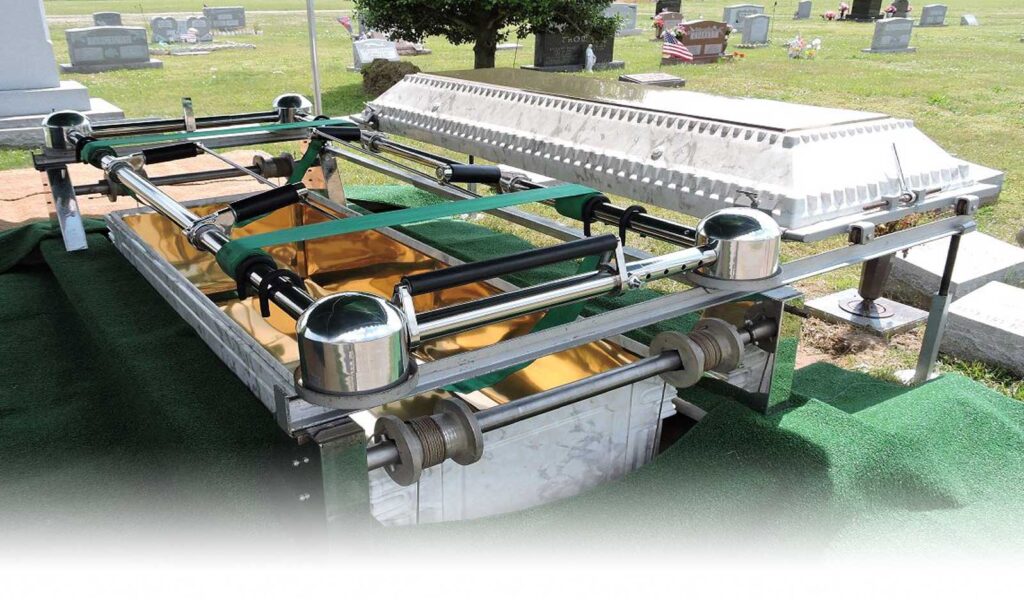
- Cemetery setup equipment (tent, vault and casket devices, chairs, artificial grass): $13,000
Some dealers will purchase their own batching plants so they can produce concrete mix on-site. The upfront costs for a low-capacity machine start around $25,000.
The amount of anticipated annual volume will ultimately determine how much infrastructure is needed.
Employees

Working with cast concrete and pouring burial vaults will require hiring a knowledgeable, well-trained staff.
Employees who work directly with concrete will need an ACI certification. Additional licenses may be required to operate certain types of transport and delivery equipment.
Every facility should appoint a person to be in charge of making sure the operation is in compliance with federal and state occupational safety regulations.
Start-up Versus Acquisition
One avenue that may be worth looking into is the possibility of purchasing an existing business in the marketplace rather than starting one from scratch.
Expanding a customer base is much easier than building one – especially if you are coming from outside the industry. There can actually be a lot of untapped opportunities in under-served areas.
There have been dealers who have increased the bottom line in a matter of months by making minor improvements and small investments.
Another point to keep in mind is that secure commercial lenders are more likely to fund an acquisition than a startup.
Partnering with Trigard
Understanding how to start a burial vault business should begin with gathering market data and progress to strategizing and securing infrastructure.
For a new venture to see long-term sustainability, the entrepreneur must leverage their resources through marketing and establish a motivated, capable team.
If you are ready to take on the challenge of opening a burial vault operation, I encourage you to explore the possibility of becoming an independent Trigard dealer.
The initial capital investment is manageable, and we will equip you with tools, resources, and training to help your business gain momentum and thrive.
We look forward to learning about your goals and vision for the future.