

Over the course of the 15 years I have worked in the funeral industry, the need to better educate families about cremation has become increasingly apparent. This is especially true for choices and terminology pertaining to final placement options for cremated remains.
With my office being located in our company’s cemetery building, I have overheard numerous families ask all sorts of questions about columbariums. They often don’t always know exactly what one is or the purpose it serves.
In order to provide some clarity, I would like to take some time and offer an in-depth answer to the question, ‘What is a columbarium?’.
Definition
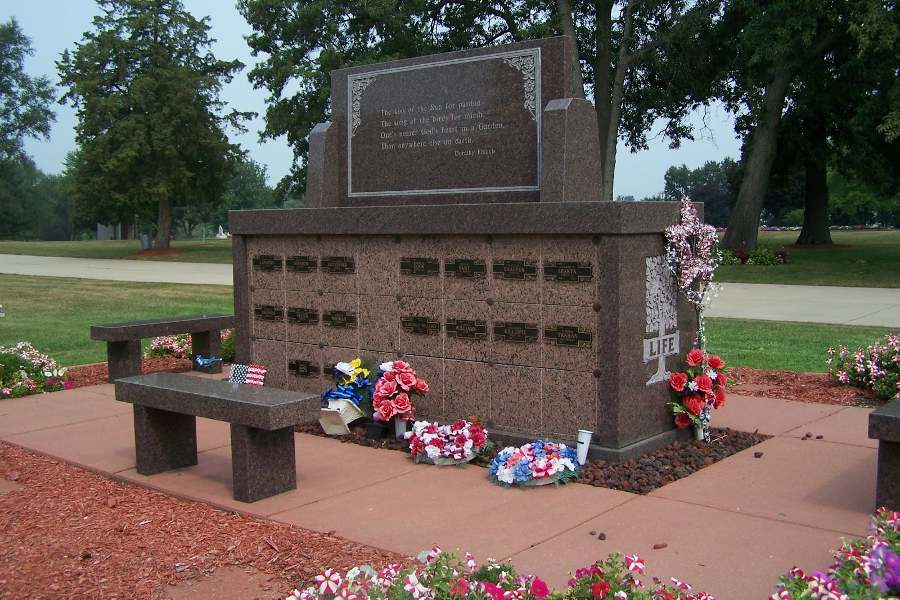
Also referred to as a niche unit, a columbarium is a permanent structure with inbuilt spaces (niches) that house inurned cremated remains.
A niche unit provides a place for family and friends to pay respects to a loved one much in the same way a grave does.
Columbariums are laid out in rows and columns. The person(s) whose remains are interred can be identified by either their name or by the location number.
A niche unit will have anywhere from a dozen to several hundred spaces. Each chamber is completely covered and securely sealed.
Columbarium Versus Mausoleum
Before becoming too ingrained in our topic, I want to first address a common misconception.
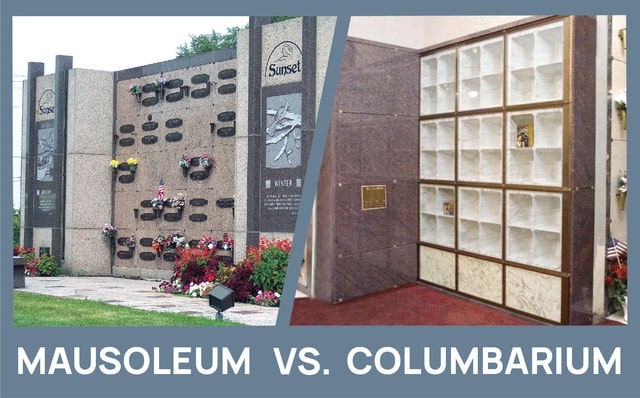
The terms “mausoleum” and “columbarium” are frequently used interchangeably. Although they are both stately structures that serve as final resting places, they each have a very distinct purpose.
Mausoleums are designed to hold casketed human remains. Columbariums, on the other hand, are much smaller and solely intended to store and protect cremated remains.
Styles and Types
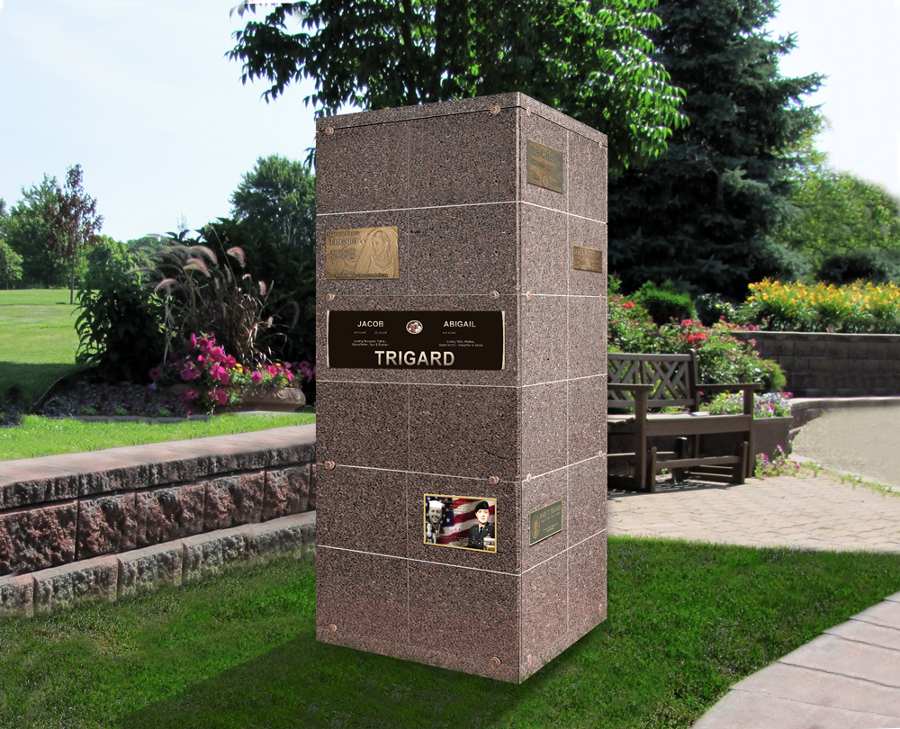
While modern day columbariums vary a great deal by size and style, they are all built with architectural design, permanence, and elegance in mind.
There are numerous types of niche units. Towers, walls, and other free-standing structures are a few of the more popular options.
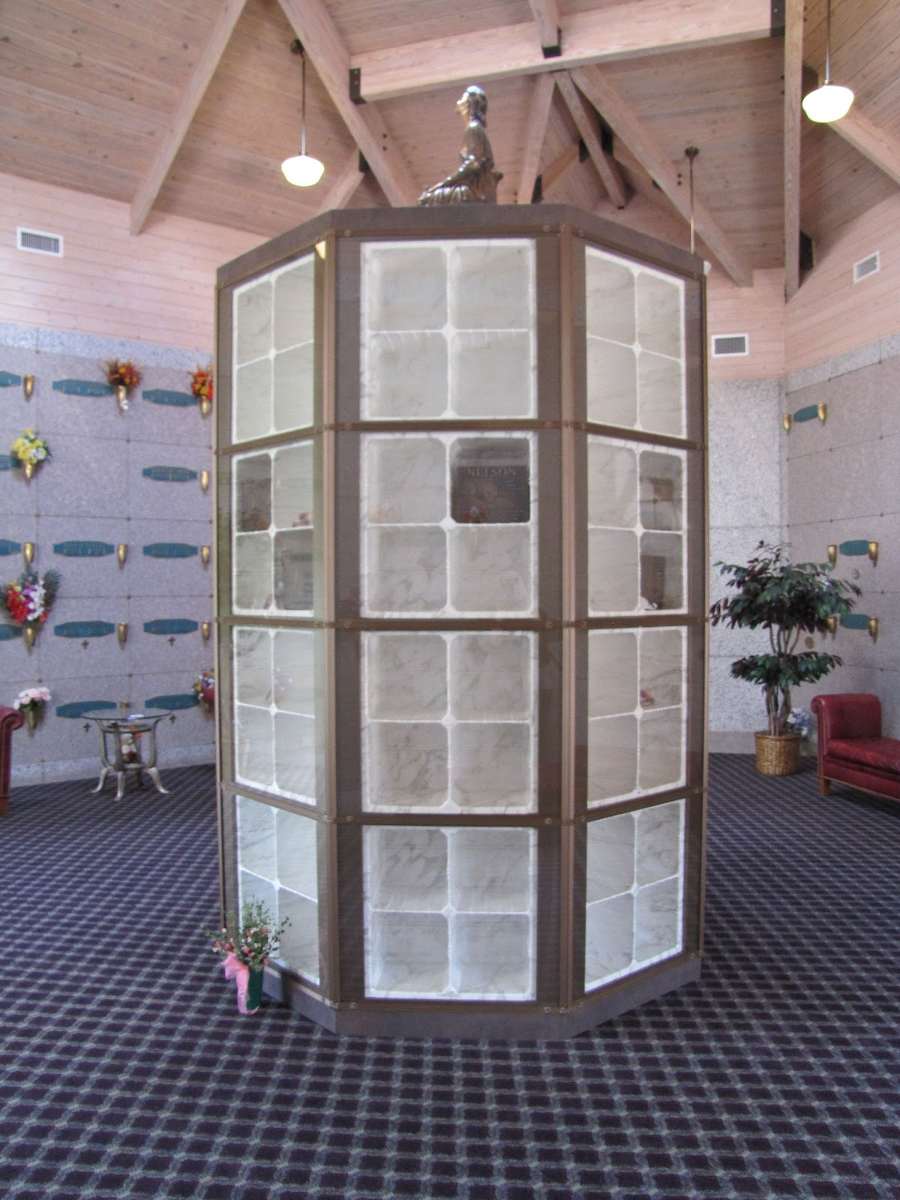
Columbariums can also be standalone buildings and rooms. Although not very common in the United States, there are niche units that have been constructed underground, beneath existing buildings.
Design and Material
So what is a columbarium made of?
A columbarium’s exterior can be made from a variety of materials including: stone, concrete, granite, marble, and brick. The majority of niche spaces are uniformly faced with glass, bronze, or granite.
Glass-front columbariums are indoor memorials that allow the urn to be visible. Similar to a curio cabinet, they hold meaningful, valuable treasures. In addition to the urn, items such as photographs, letters, and artificial flowers can be displayed in the niche.
Columbariums containing bronze-faced and granite-faced niches hold up well in the elements making them suitable for indoor and outdoor placement.
Bronze niches are timeless. Their natural warmth and beauty can’t be replicated. Granite niches are also aesthetically pleasing. They take well to laser-engraving and do not fade or scratch, making them forever legible.
Location
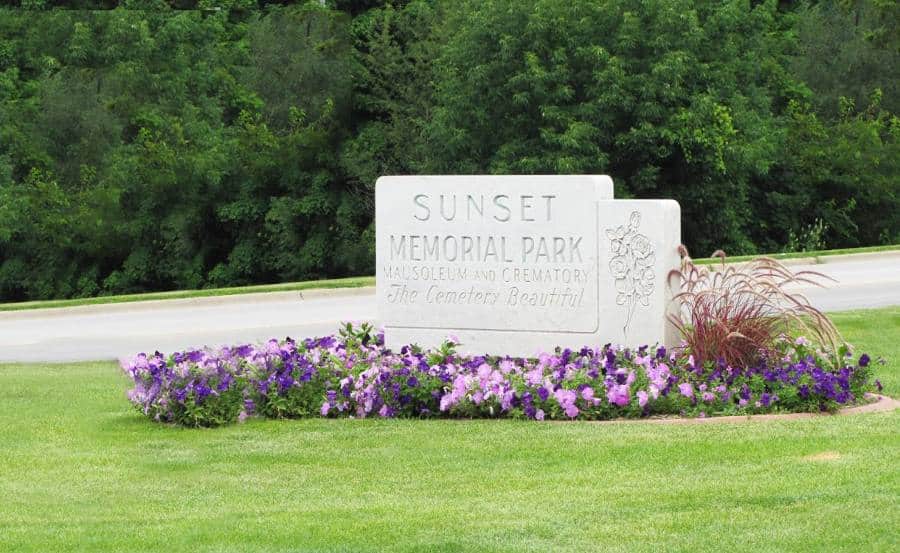
The majority of columbariums reside in cemeteries. They can be located on the grounds, inside mausoleums, and in on-site crematoriums.
Indoor niche units have the benefit of being climate controlled. They allow people to visit year-round, regardless of weather conditions.
Most outdoor columbariums are situated in open, well-landscaped areas. Walking paths and benches tend to be in close proximity.
A growing number of cemeteries are putting in columbarium gardens. They provide a serene and comfortable setting for families to honor and remember loved ones.
Some churches and temples have niche units within their building or on their property. They are convenient for families to visit and can help them feel close to their loved one during worship service.
Niche Space
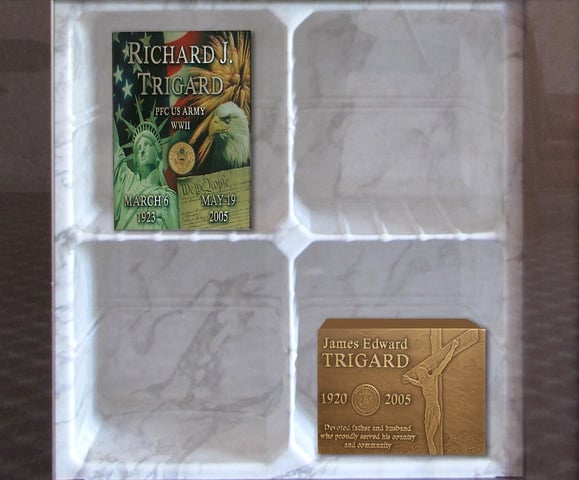
A standard-sized niche is meant to hold one urn and measures approximately 9 cubic inches.
Cemeteries and places of worship may offer units with larger spaces that can accommodate multiple urns. They are ideal for couples and families who want to be memorialized together.
Because we are a transient society, more and more cemeteries are leasing niches spaces for a predetermined time period – typically 5 to 10 years. Such an agreement provides greater flexibility if a family needs to relocate their loved one’s cremated remains to an alternate location.
Personalization
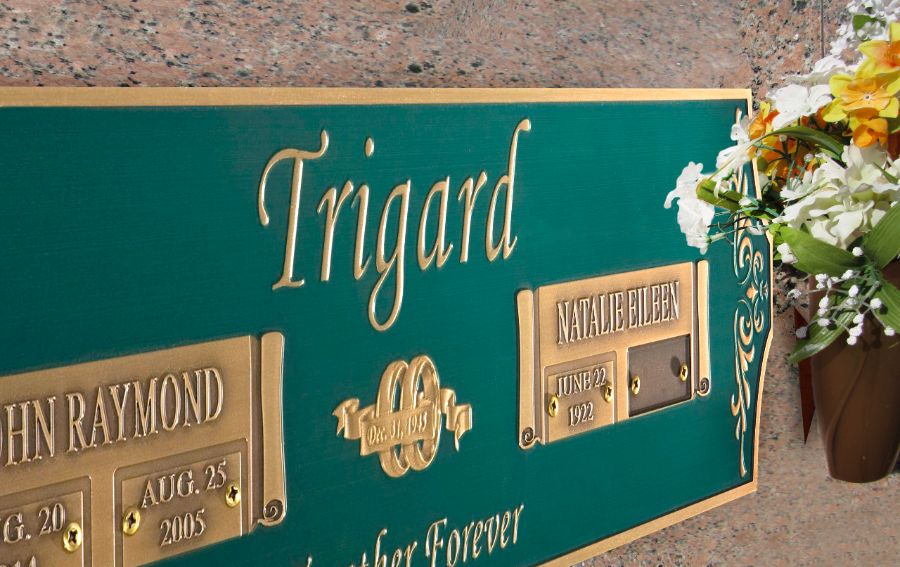
Similar to grave memorials, niche spaces have a lot of opportunity for personalization.
Many columbariums have small openings or shelves reserved for photos and mementos that have significant meaning to those left behind.
Flower vases can usually be attached next to or on the front of the space as well. Families can then change out arrangements seasonally and bring special bouquets for birthdays and anniversaries.
Special emblems and inscriptions may also be engraved next to or under the person’s name.
Symbols related to faith, hobbies, sports, nature, etc. add a personal touch and an element of uniqueness, while epitaphs in the form of verses, quotes, and sayings offer a reflection of the departed’s values, character, or personality.
Another commemoration option is to have a Trigard customized bronze niche plate mounted to the front of the space. It can be classically simple or fully customized with an oxide or Brilliant Impressions® color photo.
Private Family Columbarium Prices
Some families prefer to invest in a private columbarium designed exclusively for their loved ones, creating a sense of legacy and unity. Cemeteries that offer this option often incorporate designs the can be personalized with unique architectural features, engravings, or symbols reflecting the family’s heritage or values.
The average price for a full columbarium unit varies widely, generally ranging from $30,000 to $100,000 or more. This cost depends on four key factors:
- Size and capacity: Larger units with more niches typically cost more than smaller, basic units.
- Location: Indoor structures, prime cemetery locations, or high-demand areas are more expensive than those in outdoor or less desirable locations.
- Materials and design: Granite or glass-front columbaria typically increase the the cost.
- Customization: Additional fees apply for custom designs, roof styles, or special features.
A private columbarium offers a timeless memorial that fosters connection, privacy, and a meaningful space for generations to come.
Niche Space Pricing
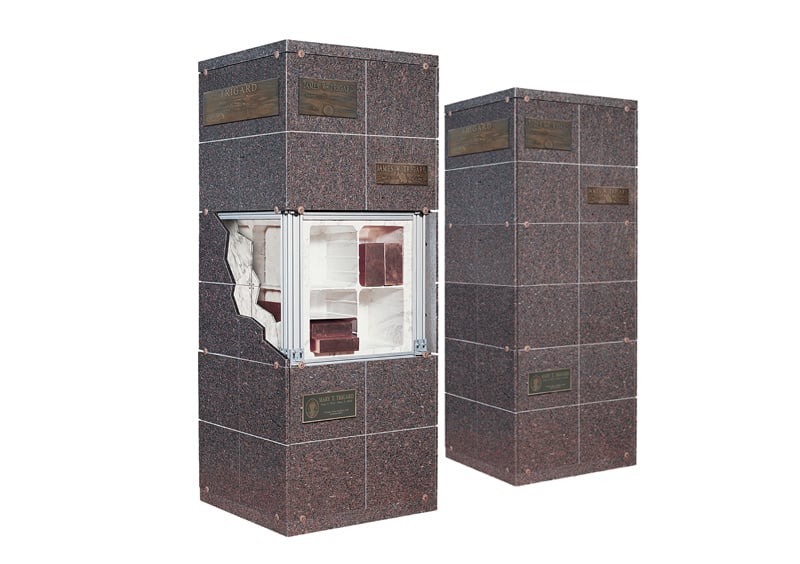
The cost of a niche in a columbarium can vary widely based on several factors, including the location within the cemetery, the material used in it’s construction, and the exclusivity of the space.
Generally, prices range from a few hundred to several thousand dollars. Purchasing a niche often includes a one-time fee for perpetual care, ensuring the niche remains maintained indefinitely.
It’s important for families to consider their budget and discuss pricing options with cemetery staff to find a solution that meets both their budget and aesthetic preferences.
Lifespan
One of the most significant benefits of choosing a columbarium for cremated remains is its longevity.
Columbariums are constructed with durability in mind, and designed to endure for centuries. The materials used, such as granite or marble, are chosen for their ability to withstand inclement weather, ensuring that the memorial will remain intact and legible for generations.
This permanence offers families a lasting site where they can come to pay tribute to cherished loved ones.
History

I would like to take the opportunity to share a little history about cremation niche units that you may find interesting.
The origin of the word columbarium is the Latin word columba, which means dove.
The first columbariums were actually small compartmentalized “homes” for doves and pigeons. They were similar in design to today’s structures and held up to one thousand or more birds.
It wasn’t until Buddhists in ancient Asia began building elaborate temples to store cremated remains that columbariums were associated with humans.
Final Thoughts
A columbarium is a permanent memorial that is designed to stand the test of time.
Each space represents a vision of love, loyalty and legacy that will provide future generations with a glimpse into the life story of the departed.
In closing, my hope is that you now have a clear understanding of what a columbarium is and agree that it is so much more than a landmark with a name and set of dates.
Thank you for taking time out of your day to read this blog. Feel free to ask a question or leave a comment below.




8 Responses
I am looking to have a columbarium for my family in a catholic cemetery in chicago or south west Michigan. I would like to have a large one that could hold approximately 40 remains. What designs do you have and how t
Do I find a cemetery to locate the columbarium? Thanks
Hi Don,
Thank you for your inquiry. I’ve forwarded your information, and you should receive an email soon with more details.
Best regards,
Jill
where can you find a columbrium garden and is there a price range for individual cremation remains. thank you!!
Hi Curtis, Many cemeteries today have cremation gardens that include niches and columbariums. The price to inter cremated remains will vary based on many factors, such as the geographical area and the prestige of the cemetery, among others. Unfortunately, it is difficult for me to provide an accurate range. My recommendation is to contact area cemeteries. -Jill
I was wondering if they are in New Jersey? And do you need a license to start one?
Hi Noah, I appreciate you reading the blog. There are certainly cemeteries with columbiums in New Jersey. If you are interested in starting a cemetery that offers columbariums, I suggest reaching out the local government to inquire about any licenses and permits. If you’re wanting to purchase a columbarium within in an existing cemetery, I recommend contacting their staff. I hope this response was helpful. Please feel free to reach out again with any additional questions. -Jill
What is the cost now days for my ashes to be placed in a Columbian. CKR
Hi Charles, Thank you for reading my blog. The cost of placing cremated remains (ashes) in a columbarium can vary significantly. You can expect to pay for the space itself, as well as the opening and closing costs. While I can’t provide an exact figure or range, the minimum cost is likely a few hundred dollars. Reaching out to a cemetery directly for their specific pricing is the best way to get accurate cost information. Best regards, Jill