

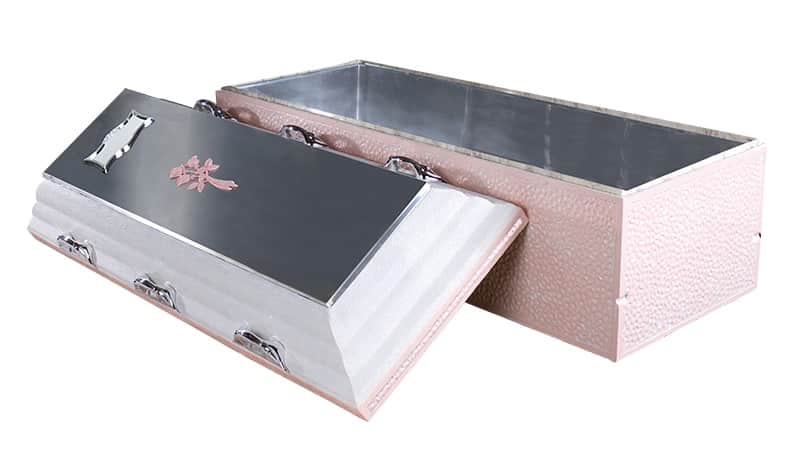
On the surface, the question “When did burial vaults first start being used?” seems pretty cut-and-dried. Based on the definition that a burial vault is a container that encloses a casket to help prevent a grave from sinking, it is fair to say they got their origin in the United States in the latter part of the 18th century. The term “burial vault”, however, was not regularly used until the early 1900s.
It is important to point out that what was considered a burial vault over 200 years ago is very different from what is considered a burial vault today. A deeper dive into history uncovers a wealth of information about a burial vault’s evolution in terms of its intended purpose, construction, and usability that is certainly worth exploring.
Original Purposes of Burial Vaults
The first rudimentary burial vaults were made of wood and often called rough boxes. In the late 1700s, the need for a more rigid form of protection to safeguard against grave robbery arose. Sadly, jewelry and clothing were regularly stolen from cemeteries and resold for a profit.
Body snatching, which also took place during this time period, further contributed to the demand for a secure burial vault, also known as an outer burial container. Robbers called resurrectionists” or “resurrection-men” exhumed and sold bodies to medical schools requiring cadavers for anatomical studies. There are even documented cases of doctors taking part in this irreverent practice.
Families who could afford to do so hired watchmen or placed wired alarms in their loved one’s casket to protect against graveside robbery. In 1881, a “coffin torpedo” that would set off a lethal blast of lead balls if someone attempted to open the casket was invented. As burial vault usage increased, these practices were used less frequently and eventually became obsolete.
An additional need for using some type of outer burial container was recognized by grave diggers who regularly witnessed the collapsing of graves. Uneven grounds made for hazardous working conditions and caused difficulties when preparing new graves.
The superstition surrounding the idea of death resulted in yet another reason to use some type of burial vault in the 1700s and 1800s. Families wanted their loved ones’ remains to be properly secured and kept safe from much-feared ghouls who were believed to roam cemetery grounds.
Early Years
Geography and a family’s financial circumstances played a key role in determining the types and styles of burial vaults used in their infancy. Unfortunately, many families did not have the financial means to purchase a burial vault.
Up until the late 1800s, the most common type of burial vault-like structures used in the United States were made of cemented brick or stone that lined the sides, and sometimes, bottoms of graves. They had an arched cover and were built for both single and multiple burials.
Burial vaults constructed to house multiple caskets were commonly referred to as chamber tombs. They were an affordable option and in many instances used for criminals, the poor, and victims of slavery. Those who passed away from yellow fever and other contagious diseases were also placed in communal graves, some of which lacked an outer burial protection.
Archaeologists and historians in the United States gained a great deal of knowledge about primitive burial vaults in 2015 after workers preparing to install a water main discovered burial chambers beneath the lower Manhattan area of New York City. One “burial vault” in particular contained two dozen caskets that were entombed in the early 1800s. It was lined with fieldstone, had a white-washed, barrel-shaped brick ceiling, and a locked wooden door.
Strides Towards Modernization
Probably the most unique attempt at developing a present-day, burial vault can be credited to Andrew Van Bibber. In 1878 he patented a burial-safe designed specifically to prevent grave robbery. The case very much resembled a cage and was made from welded steel or wrought iron bars. It completely surrounded the casket making it nearly impossible for criminals to access.
In 1912, a fully enclosed, sealable metal burial vault designed to keep the casket free from water and other graveside elements was invented. It was very similar to vaults today in terms of form and functionality. Around the same time, vaults made from large pieces of slate which were assembled on-site made their debut and were used for a few short years in some parts of the United States.
Close to the turn of the century, six-piece concrete burial vaults started to emerge, but were quickly replaced by two-piece vaults that required less installation time. It wasn’t until 1999 that a lightweight, plastic burial vault was introduced to the market.
Today’s Burial Vaults
The many developments and improvements made to burial vaults, especially after the 1880s have shaped what we have come to know as a present-day burial vault. This certitude can be supported by the countless burial vault related patents that can be found on the United States Patent and Trademark Office’s website.
Having been refined through the years, concrete burial vaults are the most popular type of vault today due to their strength and protective qualities. Metal burial vaults are the second most common, followed by those made of plastic.
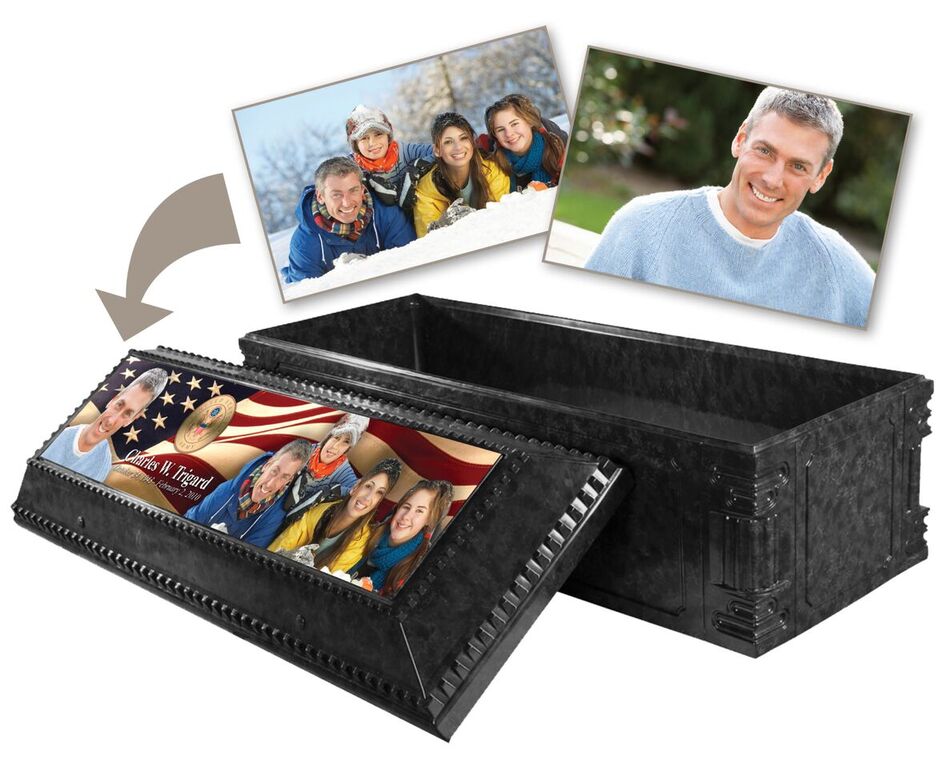
In the last couple of decades, personalization options have taken burial vaults to the next level. For example, certain Trigard burial vaults have the option for photos and words of endearment to be added to the top and sides of the vault. Decorative handles, personalized nameplates, and cover emblems are also offered.
A Long Answer to a Short Question
As you now know, burial vaults have come a long way and are needed for much more than protection against grave robbery and suspected ghouls. Not only must a modern burial vault secure a casket’s investment, it also needs to be strong enough to support the weight of the earth and heavy cemetery equipment.
If you were looking for a quick answer to the short question, “When did burial vaults start being used?”, you certainly got more than you bargained for. However, I hope that you gained some insight as to what constituted a burial vault years ago and the path it took to get where it is today. Perhaps you even learned some interesting facts along the way.




6 Responses
My name is Cindy and I live in Arkansas. I have been watching some videos made by a guy named Ron. I think. He goes all over the USA to cemeteries and telling stories about someone who died a long time ago. He got me interested in grave robbers when he told a couple of these stories in the 1800s. So I looked up this site asking about vaults. Thank you so much for the information
Hi Cindy, I have seen those videos. He seems like a great guy! I’m glad you found the information useful!
Hi!! I am currently researching a burial that took place in Kansas in 1959. Without going into detail, my questions
are:
How can I find out details regarding the burial [including ascertaining whether or not a burial vault was used] without knowing whether anyone who played a part in this burial is reachable, or even still alive??
Would the cemetery in question still have such records?? Do cemeteries typically keep such records??
Thanks so much, in advance, for your feedback. I am involved in a project for which such information would be most useful. The burial in question is related to a high-profile crime that was committed in that year.
Yes, cemeteries should have records pertaining to interments and the deeded owners of graves. If you can determine the current ownership or management structure of the cemetery, try to determine who is the custodian of the old records. Records dating back to 1959 were more than likely kept in a logbook or ledger. The records should indicate basic information such as decedent’s name and grave location by section and lot number. The records may also indicate the type of “outer burial container” that was used. If you can determine which funeral home oversaw the interment back in 1959 the funeral records should include a description of the outer burial container. Keep in mind many cemeteries in the early years did not require an outer burial container or vault. We hope this information helps with your search.
I work Archeological Human Remains Detection Dogs and our training requires working our dogs in cemeteries where we have permission. We typically work in very old cemeteries where vaults are not used to make sure odor is accessible to dog. I recently worked my dog in a catholic cemetery with graves from the 19050 and 1960s. What type of vault do you believe was used at that time and were they totally sealed, or could odor potentially leak out through cracks?
Hello Suzanne, Thank you for sharing a little about your line of work and for asking such an interesting question. The first plastic-sealed burial vaults, which provide the best protection for containing odors, were introduced in 1967. Before this time, vaults were lined with asphalt, which can help prevent odor leakage but is not overly effective. Early plastic-sealed vaults were considered high-end products, so I think it is safe to say that the majority, if not all, of the burial vaults in the cemetery you visited were not lined with a material capable of containing odors. I hope this information was useful. -Jill