

It is so easy to get caught up in thinking the way we do something is the right way or even the only way. As much as I don’t like to admit it, for the longest time I was under the impression that all burial services were pretty much the same and very similar to the ones I had attended in the past—I now know this couldn’t be further from the truth!
The types of burial traditions around the globe vary considerably and are fascinating. Those not aware of the tradition, logic, and meaning behind certain methods may find them a bit strange or uncanny. We must remember that most traditions are a reflection of a community’s perspective on life and interpretation of death, and are typically centered around heritage and religious beliefs.
The diverse forms of disposition highlighted below are sure to pique your interest. With that being said, I would like to point out that not everyone living in the area or belonging to the specific group being discussed will necessarily participate in the practices being presented. Now let’s take a trip around the globe!
Republic of the Philippines
The Philippines is an archipelagic country located in Southeast Asia. Approximately 86% of citizens are Roman Catholic and adhere to faith-based burial traditions. The remaining population is mostly made up of indigenous tribes that have very unique interment procedures.
The Isneg people of Apayo often bury their loved ones under the family home’s kitchen. After being wrapped in a mat, the deceased is placed in a casket containing items such as water, food, and weapons needed for a smooth transition into the next world.
When someone from the Cavite group’s life is coming to an end, he or she finds a special tree in a wooded area. A small hut is then built at the tree’s base for the person to reside in until passing. The body is then vertically interred inside the hollowed-out tree trunk.
Members of the Palaweno community bury their dead in jars made of stone or clay. The jar’s cover features two figurines riding in a boat and represents the deceased being paddled into the afterlife.
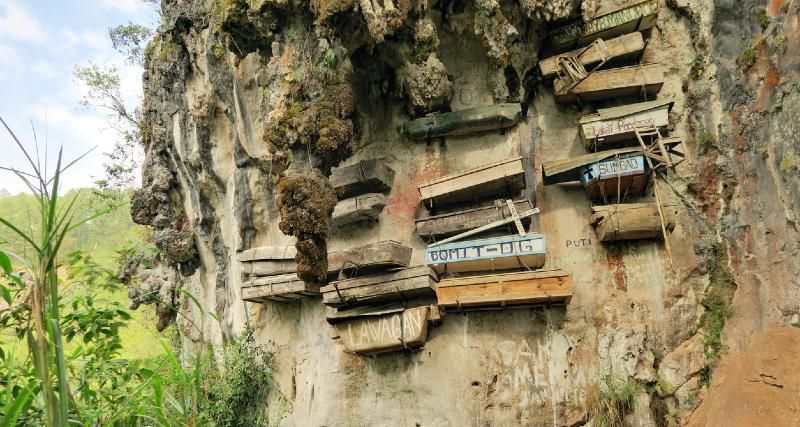
The Sagada tribe take part in hanging coffins which involves attaching wooden caskets to the side of a cliff, mountain, or outside of a cave. At one time this form of interment took place in other countries, but is now only occasionally done for notable community members in Kankanaey.
Africa
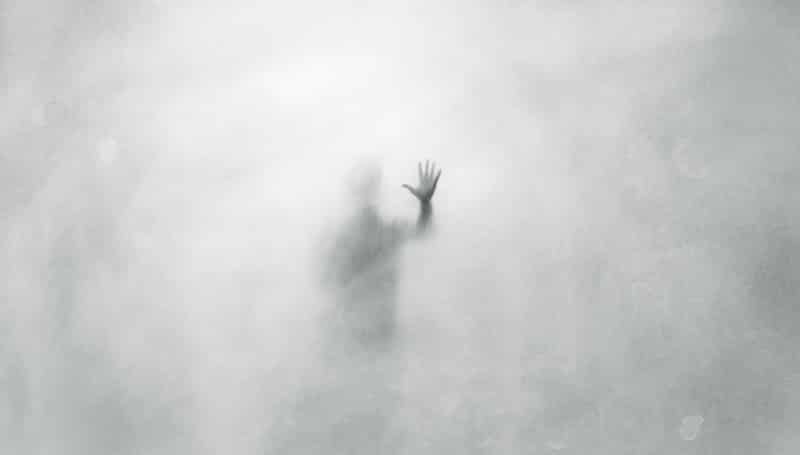
In many parts of Africa, it’s critical for burials to be carried out “correctly” in order to make sure the deceased’s spirit is at peace. Otherwise, those who have passed on cannot be reunited with their ancestors leaving them incapable of looking after their surviving family. It is also feared that the departed’s ghost could roam the earth and wreak havoc among the living.
The majority of interments in Africa take place on family land that is in close parameters to the home. The loved one is wrapped in clothing and covered with the skin of an animal that has been sacrificed. Certain belongings are placed in the casket to ensure safe passage into the afterworld.
During the ceremony, the family stands on one side of the grave and other guests stand on the opposite side. The person being laid to rest is asked to not harm the living and to strengthen the earth for the benefit of its inhabitants. Attendees sometimes express their condolences and celebrate their loved one’s life by dancing and singing.
Children and those who are not married are typically forbidden at committal services.
China
Chinese burial customs are deeply rooted in tradition and follow principles of feng shui. Although procedures differ by region, the broad belief is that an improper burial brings bad luck to those left behind and hinders transition into afterlife.
Most cemeteries are found on hillsides, where the higher the grave the better. The process of laying someone to rest varies depending on the departed’s age, societal position, and marital status. Expectant mothers and engaged couples do not attend services as it could lead to subsequent misfortune.
Family and friends arrive at the cemetery in procession and turn their heads while the casket is removed from the hearse. As the casket is lowered into the ground, the priest chants and the bereaved cry out in sorrow. Guests then toss dirt on top of the casket to signify the deceased’s return to earth.
At the conclusion of the ceremony, the family presents attendees with a packet containing money and a towel to wipe away their perspiration. After returning home, mourners burn their clothing to keep the negativity associated with death at bay.
Tibet and Mongolia
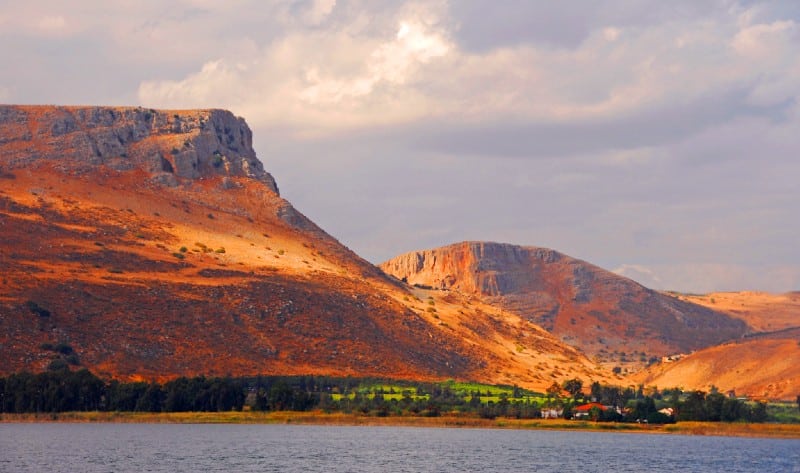
Vajrayana Buddhists from Mongolia and Tibet have sky burials for their loved ones.
This is a type of excarnation that involves placing the body on top of a mountain where it is exposed to the elements and scavenging animals. Since the renewed soul is thought to have moved on, the body is viewed as an unoccupied vessel that doesn’t need to be preserved.
Using the body to feed other living creatures is considered a generous act on behalf of the deceased. The entire process is intended to remind those left behind that life is only temporary.
Evolving attitudes toward death and limited mountainous land has caused the number of sky burials to decrease in the last couple of decades.
Western Culture
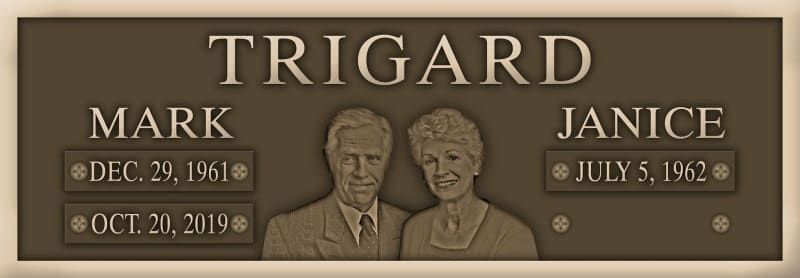
Here in the western world, you will find that almost all companion grave memorials feature the wife’s name on the right and the husband’s name on the left. This fact may not seem all too exciting, but the reasons why this has been done for centuries are quite interesting.
One school of thought is that married couples should be buried just as they stood at the altar, ensuring the bride is closest to her groom’s heart. This also follows suit with the bride’s guests being seated on the right side of a wedding venue with the groom’s guests on the left side.
Another theory dates back to medieval times when a woman would walk on the left side of her husband, allowing his right arm to be so he could access his sword and protect against oncoming threats. Believe it or not, it was not uncommon for a groom to fight off suitors in search of a bride during an actual wedding ceremony.
Expect the Unexpected
While doing research for this blog, I began to recognize some surprising similarities amongst what on the surface seemed like very different burial techniques. It quickly became apparent that many rituals are linked to superstition and fear. Learning how symbolism is creatively used to illustrate the spirit’s journey was also intriguing.
I believe what stood out the most was that all the practices I read about were done out of respect and with good intentions. Although it was not always initially apparent, the best interests of the deceased as well as surviving family members and friends were kept in mind.
Prior to writing this blog, if someone were to ask me what words first come to mind when I hear the word “burial”, I probably would have said cemetery, grave marker, casket, and burial vault. If I were asked that same question today, my answer would be completely different. I presume yours would be as well.
Resources
Ruddock, Dr. Vilma M.D., “Death Rituals in Africa.” Love to Know
“Funeral practices and burial customs in the Philippines.” Wikipedia, June 17, 2021
“Graves, Burials and Cremations in China.” Facts and Details, June 2015
Gerber, Charlotte and Kirk, Julie. “Chinese Death Rituals.” Love to Know
Myers, Jeremy. “Buried in the Trees and Sky.” Redeeming God