

I’ve lost count of the misconceptions I’ve heard surrounding funeral service, many of which continue to circulate without being addressed by credible sources.
While I may never get around to writing a book (though it’s crossed my mind more than once), I’m proud to help Trigard shed light on the facts, one topic at a time.
As a company, we strive to be a voice of clarity in a space often clouded by uncertainty. To that end, let’s tackle five common myths about burial vaults and uncover the truths behind them.
Myth 1: Burial vaults are required by law

Burial vaults are not mandated by law in the United States. However, that shouldn’t diminish the crucial role they play.
In reality, most cemeteries require the use of a vault—or, at the very least, a grave liner. These vessels are designed and built to support the weight of the earth above and the heavy equipment used in routine cemetery maintenance.
Without an outer casket enclosure, the ground can eventually collapse, resulting in sunken graves and uneven terrain. These conditions don’t just create safety hazards but can also be distressing for family and friends visiting a loved one’s final resting place.
Myth 2: A burial vault and grave liner are one and the same

This is a common misunderstanding that is entirely untrue. While both products are intended to preserve the integrity of the plot, the differences between them are substantial.
A grave liner is a basic sectional, dome-shaped, or box-style container made entirely of concrete. Due to its porous nature, water, soil, and other natural elements can pass through it freely, accelerating casket deterioration.
In contrast, a burial vault is a lined and sealed receptacle engineered for greater strength and durability. It performs all of the functions of a liner plus reduces the risk of intrusion from outside elements.
Families who prioritize long-term protection often choose a burial vault, while those seeking only minimal structural support may opt for a liner.
Myth 3: The appearance of a burial vault doesn’t matter

This statement is not only inaccurate, but it also fails to acknowledge the emotional and symbolic value that a burial vault holds.
The moment a family leaves the cemetery marks the close of the funeral experience and the beginning of their path toward healing.
Whether they stay to witness the interment or quietly depart after closing remarks, the vault becomes the centerpiece of their last visual memory and one they’ll carry forward.
In this respect, the look and feel of the vault can be a powerful part of the farewell.
Myth 4: Burial vaults are a way for funeral homes to upsell
No one enjoys feeling they’re being upsold, especially when arranging end-of-life services. Sadly, a stubborn myth still exists that burial vaults are an unnecessary add-on, encouraged by funeral homes to inflate costs.
Fortunately, families are better informed than ever, and funeral professionals are working hard to dispel this misconception. When decision-makers grasp the benefits of a vault, the choice is often guided less by cost and more by a desire for peace of mind and care.
Myth 5: Vaults Can’t be Personalized
That might have been true in decades past, but not today.
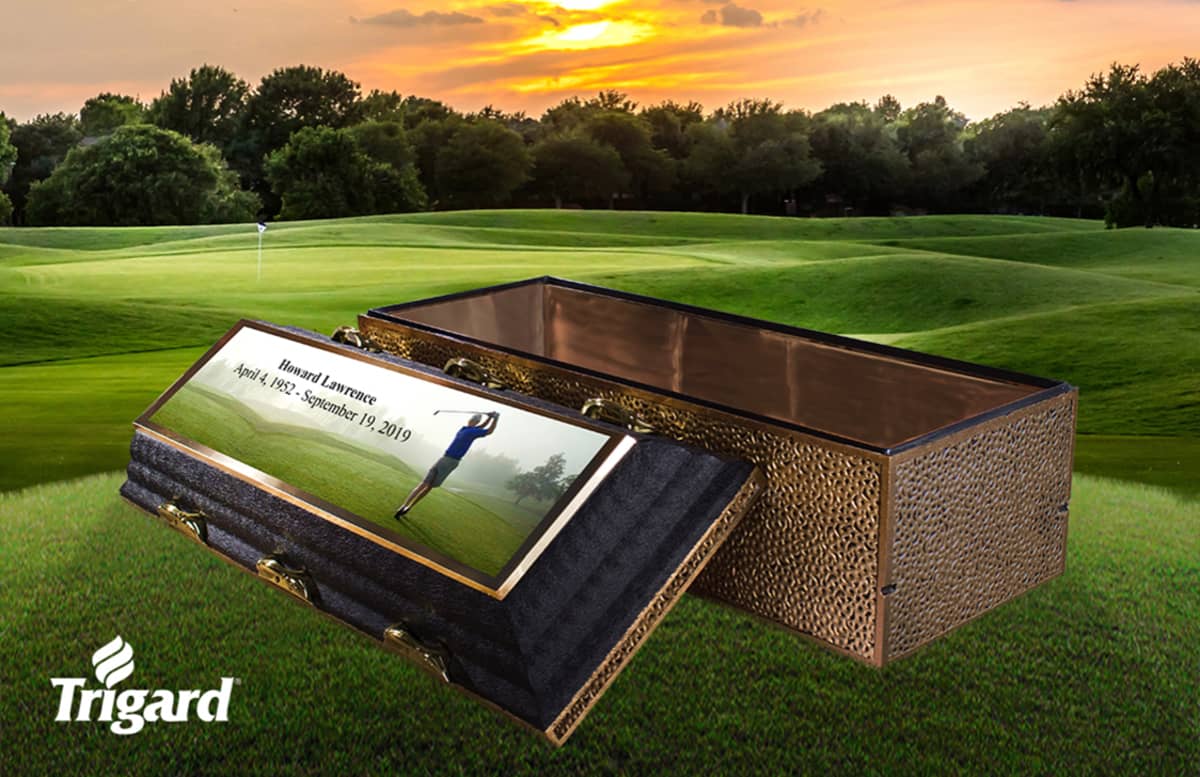
Modern burial vaults offer many personalization options, including engraved nameplates and decorative accents as well as custom paint colors and emblems that reflect military service, religious beliefs, hobbies, or passions.
Photos and appliqués can also be added to help tell the story of a life well-lived. These features do more than enhance appearance—they touch the heart and inspire storytelling for years to come.
Trigard’s Healing Tree® burial vault fosters a deeper sense of connection during the graveside ceremony. After a poem is read, attendees say their goodbyes and take a keepsake ring from the vault’s cover—perfect for a necklace, a keychain, or simply to keep close.
Myth 6: Burial Vaults Aren’t Necessary for Urns

The need for a vault isn’t limited to traditional casket burials. Many cemeteries also require an outer enclosure for cremation urns to safeguard the remains and maintain the stability of the gravesite.
Much like a casket, an urn houses precious contents. Urn vaults, which are similar in structure but smaller in size, serve the same purpose as a full-size vessel, offering grieving families the comfort of long-term peace of mind.
They can also be thoughtfully customized to highlight the individuality of the departed.
Beyond the Myths: What Vaults Truly Represent
At Trigard, we believe burial vaults are more than protective containers—they are enduring symbols of honor, remembrance, and love.
Families deserve to understand what they’re choosing and why it matters. Because behind every vault, there’s intention, there’s legacy, and there’s lasting assurance.
If you’ve come across other claims or so-called “facts” about burial vaults and aren’t quite sure what to believe, I invite you to leave a question in the comment section below. I’m here to help one myth, one conversation, and one truth at a time.